More of a visual-aid talk than a 'sermon', here are some of the slides from last Sunday. You can listen to it or download it from here.
Friday, 20 February 2015
Friday, 13 February 2015
Sunday's Sermon
Here are the slides for Sunday's sermon on John 2:1-12. You can listen to it or download it from here.
Thursday, 5 February 2015
Sunday's Sermon
Learning that those who truly follow Jesus as his disciples are invited into a personal relationship with Him, who knows us already and yet still loves us deeply.
You can hear the sermon or download it from here.
Monday, 26 January 2015
Monday, 20 October 2014
Sunday's Sermon: Daniel 6
Here's where we were yesterday as we draw towards the end of the Old Testament in "God's Big Story". We'll load the talk shortly.
Friday, 19 September 2014
'Church Fellowship' - according to Peanuts
So, next Sunday morning, when everyone's talking about Liverpool, or Arsenal, or Man U or Man City (yawn.....!), or STFTUlsterM...., or whatever sportingly happened in the previous day or two, let's try and keep our attention on what's really important, and "encourage each other in the Lord".
Malachi 3:16 "Then those who feared the Lord talked with each other, and the Lord listened and heard. A scroll of remembrance was written in his presence concerning those who feared the Lord and honoured his name."
Tuesday, 16 September 2014
If you knew today was your last day on earth, what would you do different?
So, what would you do?
What will you do?
Matt 24: 42 ‘Therefore keep watch, because you do not know on what day your Lord will come.'
HT: Bill Watterson
What will you do?
Matt 24: 42 ‘Therefore keep watch, because you do not know on what day your Lord will come.'
HT: Bill Watterson
Wednesday, 20 August 2014
Saturday, 16 August 2014
Thursday, 14 August 2014
Wednesday, 13 August 2014
Gospel centrality: rekindling the 'Wow! factor'
HT: Jonathan Carswell
Wednesday, 6 August 2014
Anselm: I believe so that I may understand
that You have made me in Your image,
so that I can remember You,
think of You,
and love You.
But that image is so worn and blotted out by faults,
and darkened by the smoke of sin,
that it cannot do that for which it was made,
unless You renew and refashion it.
Lord, I am not trying to make my way to Your height,
for my understanding is in no way equal to that,
but I do desire to understand a little of Your truth
which my heart already believes and loves.
I do not seek to understand so that I can believe,
but I believe so that I may understand;
and what is more,
I believe that unless I do believe,
I shall not understand.
- Anselm of Canterbury
HT: Trevin Wax
Saturday, 11 January 2014
So, what's really important in church?
Just spent the past couple of days around the country looking at pews. Then I saw this ...
HT: Tim Challies
Tuesday, 24 December 2013
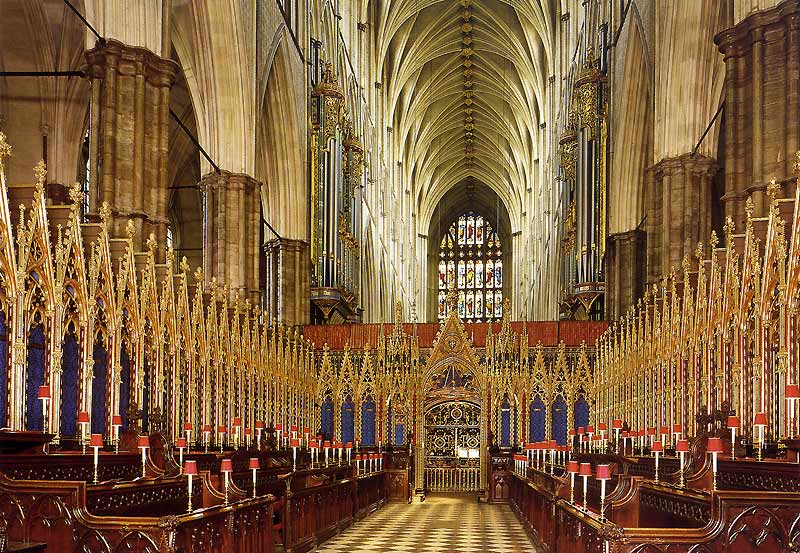
John Lennox speaks about Christmas in Westminster Abbey
"We celebrate an awesome event that has inspired great literature, music, poetry and architecture such as that which we enjoy in this magnificent Abbey. The message of Christ has transformed countless lives, spawned hospitals, hospices and universities. It has abolished slavery and brought dignity to human life. As our Prime Minister recently said: “Christianity has had immense historic influence in the development of our culture and national institutions…we are a country with a Christian heritage and we should not be afraid to say so.”
"Cosmologists tell us that 13.5 billion years ago the universe was smaller than a grain of sand – a mind stretching fact, yet one that pales into insignificance besides the realisation that 20 centuries ago the God who created the universe became a tiny seed in the womb of a humble young woman. The Word became flesh. God who had made man in his own image himself became human.
"The incarnation of God challenges the atheist belief that this universe is a closed system of cause and effect. We are told that at the time of Christ credulous people could believe in such miraculous happenings since they did not know the laws of nature. Now, in our enlightened scientific age this is impossible since miracles violate the laws of nature. The biblical records of them are just fantasies like Father Christmas.
"There are three errors here. Firstly, the comparison with Father Christmas is trivially false. I have never known an adult who came to believe in Father Christmas. I have known many adults who came to believe that Jesus Christ is the Son of God.
"Secondly, two of those adults are key figures in the Christmas narrative, Mary and Joseph. They were not credulous people. They knew as well as we do the basic laws of nature regarding where babies come from. So, when Mary was told by the angel that she would conceive, she protested: “How shall this be, since I do not know a man?” And we have just read how Joseph, on discovering Mary was pregnant, planned to divorce her. He, a devout and righteous man, was just not prepared to believe her account of a miraculous conception. Yet both of them were eventually persuaded that there was nothing immoral about the conception of Jesus by being given convincing evidence that the child had been supernaturally conceived by the Holy Spirit in a direct intervention by God.
"Thirdly, David Hume was wrong when he said that miracles like the incarnation cannot occur because they violate the laws of nature. What, after all, are those laws? They are our descriptions of what normally happens and they enable us to predict what will happen if no-one intervenes. However, God is not a prisoner of the laws that describe the regularities that He has built in to the cosmos. It is therefore no act of violation, if he intervenes in his own creation. For such intervention breaks no laws.
"Suppose I put £100 in my hotel drawer last night and I put in another £100 tonight. The laws of arithmetic say that I have £200 pounds in the drawer. If I find only £50 there tomorrow what do I conclude? That the laws of arithmetic have been broken or the laws of England? Clearly the laws of England. How do I know that? Because I know the laws of arithmetic. They have not been broken and that is what tells me that a thief has come in from outside. Similarly, when a genuine miracle takes place, it is the laws of nature that alert us to the fact that it is a miracle. If we did not know the laws, we should never recognise a miracle if we saw one. Science therefore cannot rule out miracle. The universe is not a closed system. This world is not the only world there is.
"C. S. Lewis wrote: “If God creates a miraculous spermatozoon in the body of a virgin, it does not proceed to break any laws. The laws at once take over. Nature is ready. Pregnancy follows, according to all the normal laws, and nine months later a child is born”.
"What is more, the prophet Isaiah wrote something that science could never have told him. Inspired by God he foretold Christ’s coming not nine months but six centuries before it happened: “For unto us a child is born, unto us a Son is given, and the government shall be upon his shoulder and his name shall be called Wonderful Counsellor, the mighty God, the Everlasting Father and the Prince of Peace.” These words, full of deep and powerful mystery, ring true precisely because they are true.
“Unto us a Son is given…” Christmas is a special time of exchanging gifts as expressions of love, affection or gratitude. It is, however, possible for someone to accept a gift and yet reject the giver. Imagine you have invited guests to a Christmas dinner. Your guests eat the food with relish, talk to each other animatedly but say nothing to you. They leave without a word of thanks. An impossible situation, you say? Yet that is precisely how many of us have treated God this past year. We have taken his gifts of health, ability, job, home, food, family and friends, but we have never stopped to acknowledge or thank him. We have accepted the gifts but rejected the Giver.
“Unto us a Son is given…” Here the gift is the Giver. We cannot reject it without rejecting him. And he is the Saviour of the world.
"There is much good in the world but there is also much evil – poverty, suffering, violence, war, exploitation, slavery, fear, discrimination and abuse. And who of us would dare suggest that there is nothing from which we need to be saved – anger, lovelessness, destructive desires, egocentricity, greed, spite, envy, dishonesty and hypocrisy to name but a few? Surely we would agree with G K Chesterton who in response to a question in the Times: “What is wrong with the world?” wrote to the Editor: “Dear Sir, I am, Yours faithfully, G K Chesterton.
"Are we therefore doomed to live in a world in which “it is always winter and never Christmas”? No – because Christmas has indeed come. Into our world God speaks a message full of hope: “You shall call his name Jesus for he shall save his people from their sins”. How is it to be done? Not, you will be glad to know, by suggesting another round of unrealistic New Year’s resolutions. Moral codes are very important, but they cannot either forgive us or empower us to live as we know we ought. Christ can forgive because he died for us. As the Archbishop of Canterbury said at Easter: “… the cross is the great point at which the suffering and sorrow, torture, trial and sin and yuck of the world ends up on God’s shoulders out of love for us.” And Christ can empower us to live because he rose from the dead.
"But, it will be said, it makes no moral sense for one man to give himself for another’s sins? There is force to that objection if Jesus were merely a man. But Jesus was never only a man. He was God incarnate. Because Jesus is both God and man he can offer us salvation as a gift – forgiveness, peace with God, new life and hope. Like all gifts it has to be received – in this case by the deliberate and willing act of repentance and trust in Christ that we sang about just now. Let us make it our response today:
O holy Child of Bethlehem,
descend to us, we pray;
cast out our sin, and enter in,
be born in us to-day.
We hear the Christmas angels
the great glad tidings tell:
O come to us, abide with us,
our Lord Emmanuel.
John Lennox - speaking at the Whitehall Carol Service in Westminster Abbey, 13 December 2013
HT: Ravi Zacharias Trust
"Cosmologists tell us that 13.5 billion years ago the universe was smaller than a grain of sand – a mind stretching fact, yet one that pales into insignificance besides the realisation that 20 centuries ago the God who created the universe became a tiny seed in the womb of a humble young woman. The Word became flesh. God who had made man in his own image himself became human.
"The incarnation of God challenges the atheist belief that this universe is a closed system of cause and effect. We are told that at the time of Christ credulous people could believe in such miraculous happenings since they did not know the laws of nature. Now, in our enlightened scientific age this is impossible since miracles violate the laws of nature. The biblical records of them are just fantasies like Father Christmas.
"There are three errors here. Firstly, the comparison with Father Christmas is trivially false. I have never known an adult who came to believe in Father Christmas. I have known many adults who came to believe that Jesus Christ is the Son of God.
"Secondly, two of those adults are key figures in the Christmas narrative, Mary and Joseph. They were not credulous people. They knew as well as we do the basic laws of nature regarding where babies come from. So, when Mary was told by the angel that she would conceive, she protested: “How shall this be, since I do not know a man?” And we have just read how Joseph, on discovering Mary was pregnant, planned to divorce her. He, a devout and righteous man, was just not prepared to believe her account of a miraculous conception. Yet both of them were eventually persuaded that there was nothing immoral about the conception of Jesus by being given convincing evidence that the child had been supernaturally conceived by the Holy Spirit in a direct intervention by God.
"Thirdly, David Hume was wrong when he said that miracles like the incarnation cannot occur because they violate the laws of nature. What, after all, are those laws? They are our descriptions of what normally happens and they enable us to predict what will happen if no-one intervenes. However, God is not a prisoner of the laws that describe the regularities that He has built in to the cosmos. It is therefore no act of violation, if he intervenes in his own creation. For such intervention breaks no laws.
"Suppose I put £100 in my hotel drawer last night and I put in another £100 tonight. The laws of arithmetic say that I have £200 pounds in the drawer. If I find only £50 there tomorrow what do I conclude? That the laws of arithmetic have been broken or the laws of England? Clearly the laws of England. How do I know that? Because I know the laws of arithmetic. They have not been broken and that is what tells me that a thief has come in from outside. Similarly, when a genuine miracle takes place, it is the laws of nature that alert us to the fact that it is a miracle. If we did not know the laws, we should never recognise a miracle if we saw one. Science therefore cannot rule out miracle. The universe is not a closed system. This world is not the only world there is."C. S. Lewis wrote: “If God creates a miraculous spermatozoon in the body of a virgin, it does not proceed to break any laws. The laws at once take over. Nature is ready. Pregnancy follows, according to all the normal laws, and nine months later a child is born”.
"What is more, the prophet Isaiah wrote something that science could never have told him. Inspired by God he foretold Christ’s coming not nine months but six centuries before it happened: “For unto us a child is born, unto us a Son is given, and the government shall be upon his shoulder and his name shall be called Wonderful Counsellor, the mighty God, the Everlasting Father and the Prince of Peace.” These words, full of deep and powerful mystery, ring true precisely because they are true.
“Unto us a Son is given…” Christmas is a special time of exchanging gifts as expressions of love, affection or gratitude. It is, however, possible for someone to accept a gift and yet reject the giver. Imagine you have invited guests to a Christmas dinner. Your guests eat the food with relish, talk to each other animatedly but say nothing to you. They leave without a word of thanks. An impossible situation, you say? Yet that is precisely how many of us have treated God this past year. We have taken his gifts of health, ability, job, home, food, family and friends, but we have never stopped to acknowledge or thank him. We have accepted the gifts but rejected the Giver.
“Unto us a Son is given…” Here the gift is the Giver. We cannot reject it without rejecting him. And he is the Saviour of the world.
"There is much good in the world but there is also much evil – poverty, suffering, violence, war, exploitation, slavery, fear, discrimination and abuse. And who of us would dare suggest that there is nothing from which we need to be saved – anger, lovelessness, destructive desires, egocentricity, greed, spite, envy, dishonesty and hypocrisy to name but a few? Surely we would agree with G K Chesterton who in response to a question in the Times: “What is wrong with the world?” wrote to the Editor: “Dear Sir, I am, Yours faithfully, G K Chesterton.
"Are we therefore doomed to live in a world in which “it is always winter and never Christmas”? No – because Christmas has indeed come. Into our world God speaks a message full of hope: “You shall call his name Jesus for he shall save his people from their sins”. How is it to be done? Not, you will be glad to know, by suggesting another round of unrealistic New Year’s resolutions. Moral codes are very important, but they cannot either forgive us or empower us to live as we know we ought. Christ can forgive because he died for us. As the Archbishop of Canterbury said at Easter: “… the cross is the great point at which the suffering and sorrow, torture, trial and sin and yuck of the world ends up on God’s shoulders out of love for us.” And Christ can empower us to live because he rose from the dead.
"But, it will be said, it makes no moral sense for one man to give himself for another’s sins? There is force to that objection if Jesus were merely a man. But Jesus was never only a man. He was God incarnate. Because Jesus is both God and man he can offer us salvation as a gift – forgiveness, peace with God, new life and hope. Like all gifts it has to be received – in this case by the deliberate and willing act of repentance and trust in Christ that we sang about just now. Let us make it our response today:
O holy Child of Bethlehem,
descend to us, we pray;
cast out our sin, and enter in,
be born in us to-day.
We hear the Christmas angels
the great glad tidings tell:
O come to us, abide with us,
our Lord Emmanuel.
John Lennox - speaking at the Whitehall Carol Service in Westminster Abbey, 13 December 2013
HT: Ravi Zacharias Trust
Monday, 9 December 2013
Sunday, 8 December 2013
Wednesday, 4 December 2013
Monday, 25 November 2013
Friday, 22 November 2013
Wednesday, 20 November 2013
Helen Roseveare: Jesus intercedes for me to make his love real to me
“I had never deserved to be forgiven in the first place when I was converted. I could do nothing to merit God's favour, His grace, His love. If all I had ever known was unmerited and undeserved grace, how could I then forfeit that which I never earned?... Was I too proud, in some strange, inverted way to humble myself to accept an unmerited forgiveness? I know that it was all of grace, yet my inner being wanted to right to do something to merit it. I was trying to work out my own salvation, to earn God's forgiveness, to prove the sincerity of my repentance...At last I knew that it was true. It was not based on my feeling or on my emotions. It was no dependent on my faith or my obedience. In no way could I merit or deserve it. He loved me. He knew me through and through, better than I knew myself, and yet still, He loved me. Christ died on Calvary to tell me that. Christ lives in Heaven, an unceasing intercessor on my behalf to make that love real to me in my experience.”
Helen Roseveare, Living Sacrifice: Willing to Be Whittled as an Arrow
One of the great privileges of my time here in Macosquin was to have this small giant of faith speak to our congregation. Still so memorable after so many years.
HT: Scotty Smith
Subscribe to:
Posts (Atom)
.png)
.png)
.png)
.png)